
How to Check Criminal History in Oneonta
Match the source to the event. The Oneonta Police Department holds its own incident reports. City Hall handles city crash reports and public-record requests. Oneonta Municipal Court keeps city traffic and nontraffic misdemeanor matters. The county jail and county courts become relevant when an arrest leads to booking or a charge falls outside municipal jurisdiction. ALEA's fingerprint record is a separate statewide self-review product.
- Ask Oneonta police for the incident record if you were the reporting person. The department requires in-person pickup.
- For a crash report, give City Hall the location type, event date, and involved name so staff can identify the correct agency and file.
- Search Oneonta Municipal Court by citation or case number and last name, or by last name and birth date.
- Check the Blount County jail roster for a city arrest and the county clerk when a felony, appeal, or county-level case is involved.
- Use an ALEA personal criminal-history review when the goal is to inspect your own fingerprint-linked Alabama record.
No single Oneonta criminal-record channel supplies the officer narrative, booking status, municipal docket, county disposition, and statewide history at once.
Oneonta Incident Record Copy Rule
Oneonta has a narrow incident-copy rule that can surprise a requester. The Police Department says an officer's report may be obtained only by the person who reported the incident. The copy must be picked up in person at the police department. That is more limited than asking the city for any report tied to a name or address.
The official Oneonta incident-report instructions state both the reporting-person and pickup conditions.
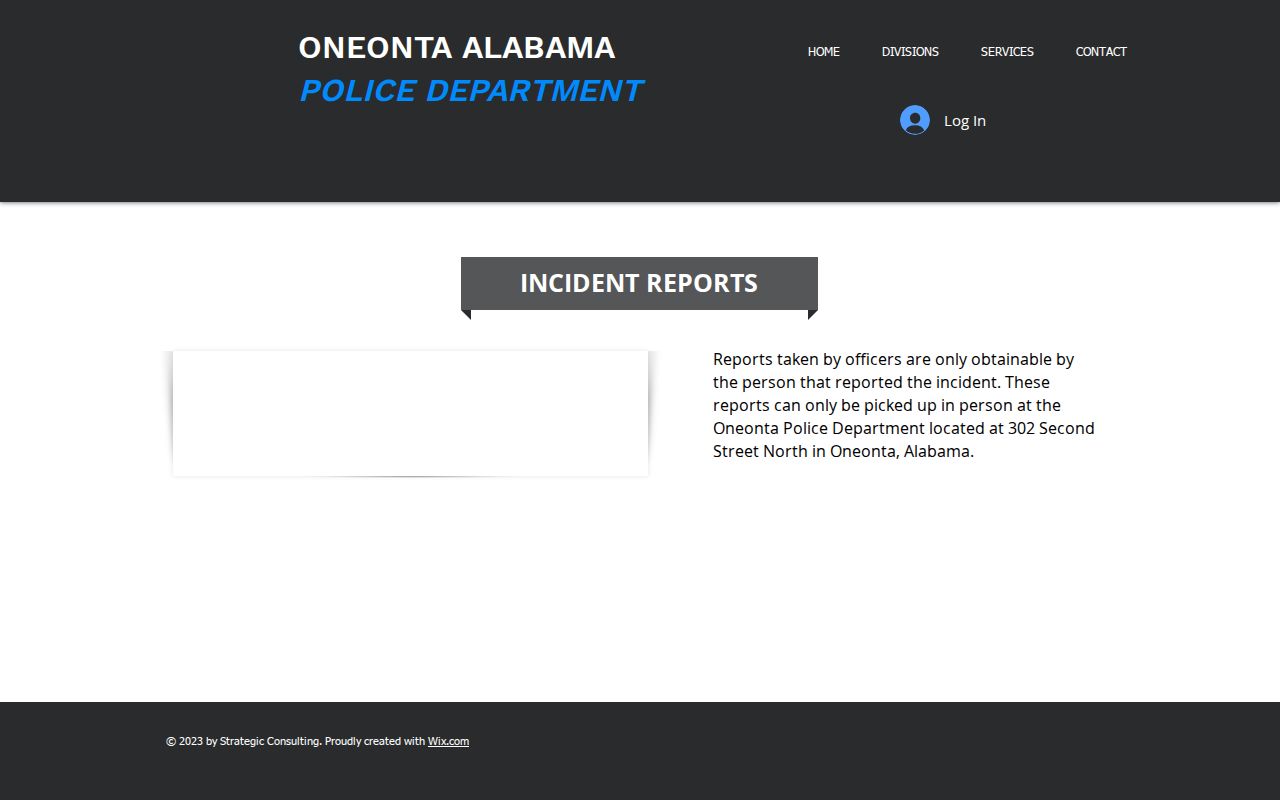
This rule makes the identity of the original reporting person central to a Oneonta police-record request, even before any redaction review begins.
Crash reports follow a different Oneonta route. City Hall asks whether the crash occurred inside Oneonta, on a highway, or in a parking lot, plus the date and an involved name. A city-written report costs $10 by cash or check with proper identification, or $13 by card. The Oneonta accident-report instructions route county-written reports to the Blount County Sheriff's Office and trooper reports to ALEA. That agency check prevents a trip to the wrong counter.
The Oneonta Police Department
The Oneonta Police Department is at 302 Second Street North. Administration is 205-625-4351, patrol nonemergency is 205-625-4913, and the department email is opd400@otelco.net. Police investigations can also be reached through the city directory at 205-813-7187. Investigators normally work weekdays from 8:00 a.m. to 4:00 p.m., with an on-call investigator after hours and on weekends.
The department creates the incident and arrest reports for events handled by its officers. Those reports do not automatically become municipal court files. The court holds filed cases, while the police file holds the officer's account and investigative material. Active investigations, protected people, evidence, and confidential sources may limit disclosure.
The official Oneonta police contact page shows where a city police-record request begins.
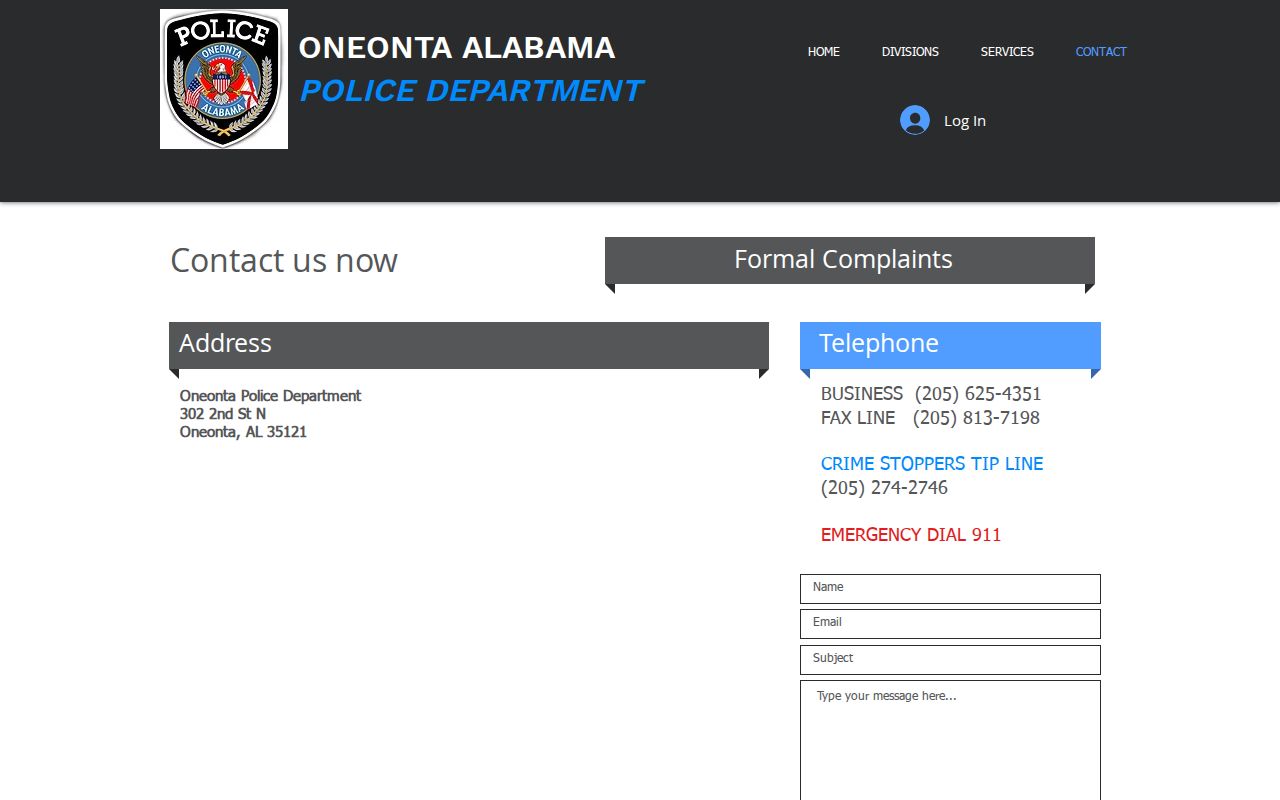
That city contact should be used for Oneonta officer reports, while sheriff or trooper reports must go to the agency that wrote them.
Oneonta Police Record Sources
Four divisions shape Oneonta police work: Administrative Operations, Investigations, Patrol, and Administrative Services. Patrol can create the first report and arrest paperwork. Investigations may add follow-up reports and evidence records. Administrative functions support the custody, control, and release of documents. A request should identify the event and desired record instead of asking for every item associated with a person.
Department specialties include evidence technicians, traffic-homicide investigation, fingerprint identification, commercial-vehicle inspection, and Too Good for Drugs. These roles help explain why one event may generate several records with different access limits. A releasable front-page report may exist even when evidence, crime-scene media, or investigative notes remain withheld.
Arrests and Bookings in Oneonta
Oneonta contracts for municipal inmates to be held at the Blount County facility. The sheriff's roster uses “Oneonta Municipal” as an arresting-agency value. A city arrest can therefore appear in a county custody product even though the Oneonta Police Department keeps the originating incident or arrest report. The roster's charges reflect the booking event, not a finding of guilt.
Search current custody or the 48-hour release view for a recent booking. Then use the Oneonta Municipal Court portal for a city citation or qualifying municipal matter. A felony or county-court case requires the Blount Circuit Clerk. Readers needing the wider county process can use the Blount County arrest history channels without treating county jail data as a full Oneonta case outcome.
Oneonta Municipal or Circuit Record
Oneonta Municipal Court hears traffic and nontraffic misdemeanors within the city or police jurisdiction. It also handles municipal-ordinance matters. A felony does not end in municipal court. A city matter appealed to Circuit Court creates an appeal record with the Blount Circuit Clerk, and a felony can move from early District Court proceedings into the 41st Judicial Circuit.
Use the charge and case number to choose the custodian. The municipal clerk is the source for a Oneonta citation, plea, city judgment, or payment status. The Blount Circuit Clerk is the source for the county docket, indictment, motions, disposition, and appeal record. The police report remains at Oneonta PD even when the prosecution moves elsewhere.
Oneonta Municipal Court Records
The court is adjacent to City Hall at 202 Third Avenue East. The counter is open weekdays from 8:00 a.m. to 4:00 p.m., and sessions are held Wednesdays at 1:00 p.m. Call 205-274-2126 for the court. Payment forms accepted by the court include cash, money order, and cashier's check, but not personal checks.
| Court | Oneonta Municipal Court, adjacent to City Hall. |
|---|---|
| Matters heard | Traffic and nontraffic misdemeanors within city or police jurisdiction, plus municipal-ordinance cases. |
| Lookup paths | Public citation portal, phone, or clerk counter. |
| Search keys | Last name with citation or case number, or last name with date of birth. |
| Custody link | Municipal inmates are held under the city's county-facility contract. |
| Security | X-ray and metal screening; firearms, knives, mace or pepper spray, drugs, and alcohol are prohibited. |
The city's municipal court page supplies the official schedule, payment rules, and security notice.
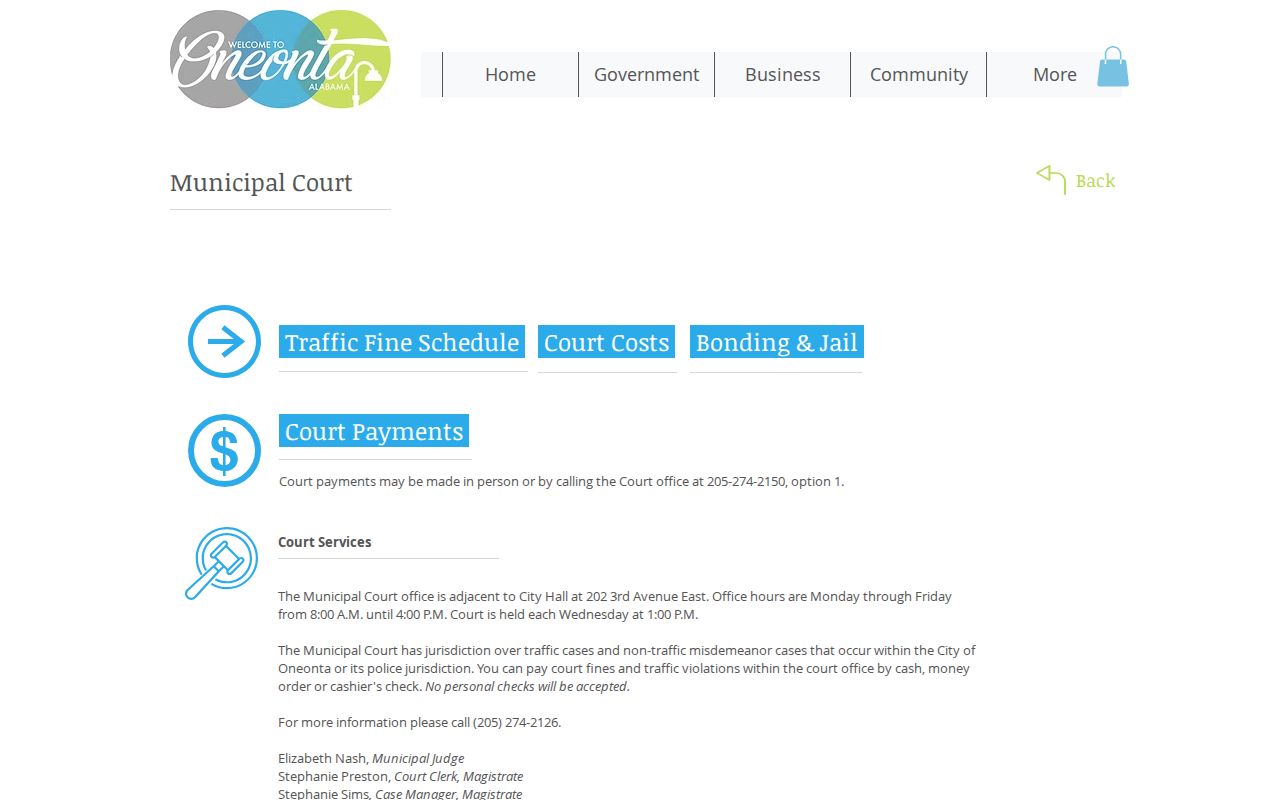
This city source confirms the practical clerk-counter details that a broad county search cannot provide.
Search Oneonta Court Records
The Oneonta GovtPortal is a citation and payment locator, not a full criminal-history database. Its public search form is visible without logging in. One mode combines last name with citation or case number. The other combines last name with date of birth. Voice pay is 205-255-9315, and the portal contact is 205-274-2149.
| Search mode | Fields | Access note |
|---|---|---|
| Citation or case | Last name; citation number or case number | Public search button is visible without login. |
| Birthday | Last name; date of birth | Useful when the number is unknown. |
| Not documented | Sort, export, result limit, maintenance schedule | Do not assume these functions exist. |
The official Oneonta court search shows both lookup modes.
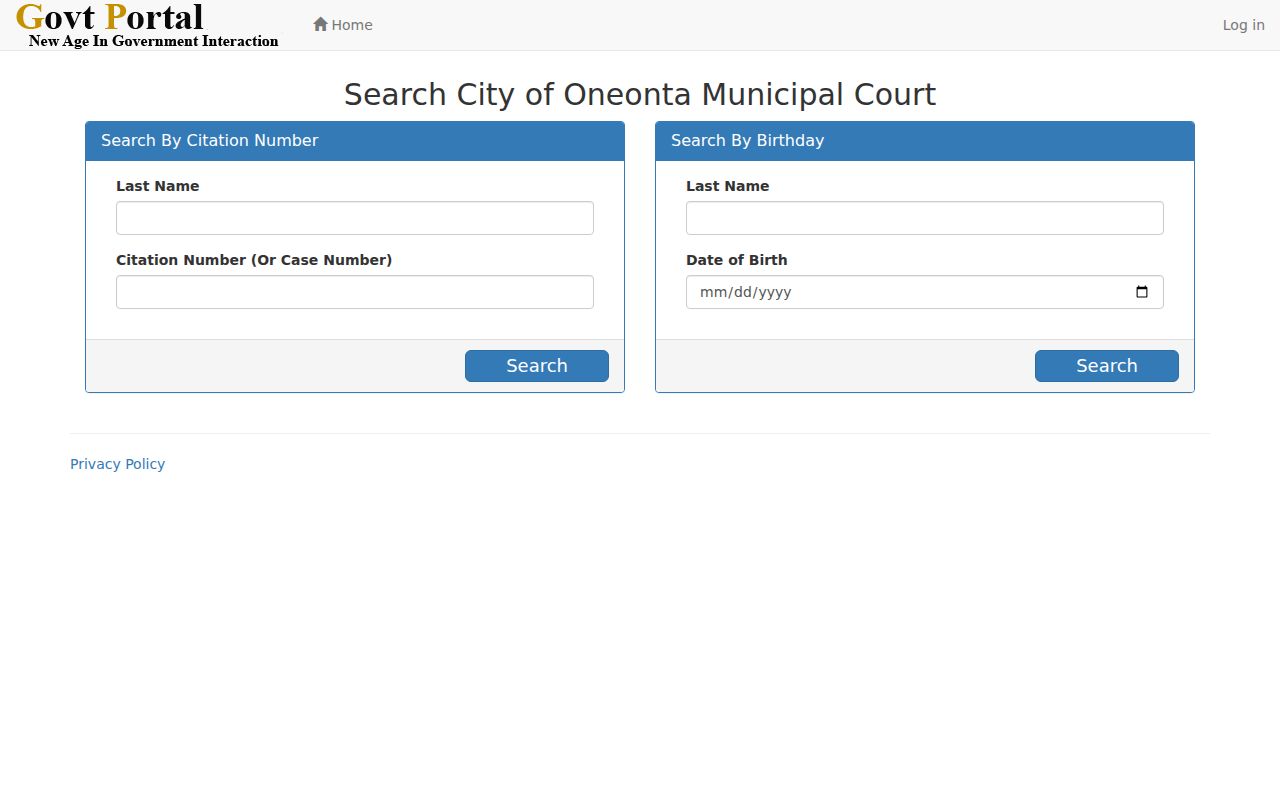
The portal can locate a municipal matter, but the clerk remains the source for the complete record and any question about its status.
Where Oneonta Records End Up
A Oneonta officer creates the first city report. If an arrest follows, county jail staff create the booking file. Prosecutors and courts create a separate case stream. A municipal matter stays with the city unless it is appealed, while felony proceedings and county-level charges run through the Blount courts. Reportable fingerprints and later dispositions can feed Alabama's repository.
Record flow: Oneonta Police Department › Blount County Courts › Alabama Law Enforcement Agency
Timing explains why sources can disagree. A new jail booking may appear before a court disposition exists. A court judgment may be richer and more current than an ALEA event cycle if disposition reporting has not yet matched. Compare the city report, court file, and your own ALEA review when accuracy matters.
Oneonta Public Record Request Limits
Oneonta requires one record per public-record form. Submit it to the city clerk in person, by mail, or by email to acole@cityofoneonta.us. Do not prepay. The city may ask for approved identification and allows two weeks, while a vague or compiled request may take longer. Specific event dates, subjects, and record types make the request easier to route.
| Form area | Requested information | Practical rule |
|---|---|---|
| Requester | Name, date, address, city/state/ZIP, phone, email | Fields are present but not marked required on the form. |
| Request | Purpose and specific record description | Use one form for one record. |
| Agreement | Applicant signature and date | Do not prepay before notice. |
| Standard copies | $0.50 per page | Maximum 50 pages per request; other media or processing can cost more. |
Restricted categories listed by the city include warrant or pending-case material, NCIC, ACJIC and LETS information, internal affairs, confidential sources, crime-scene media, and evidence. Ask whether a redacted part can be released when a full file cannot.
Oneonta Criminal Record Context
Oneonta is Blount County's largest incorporated place and the county seat. The Census QuickFacts profile supplies current civic context for the city.
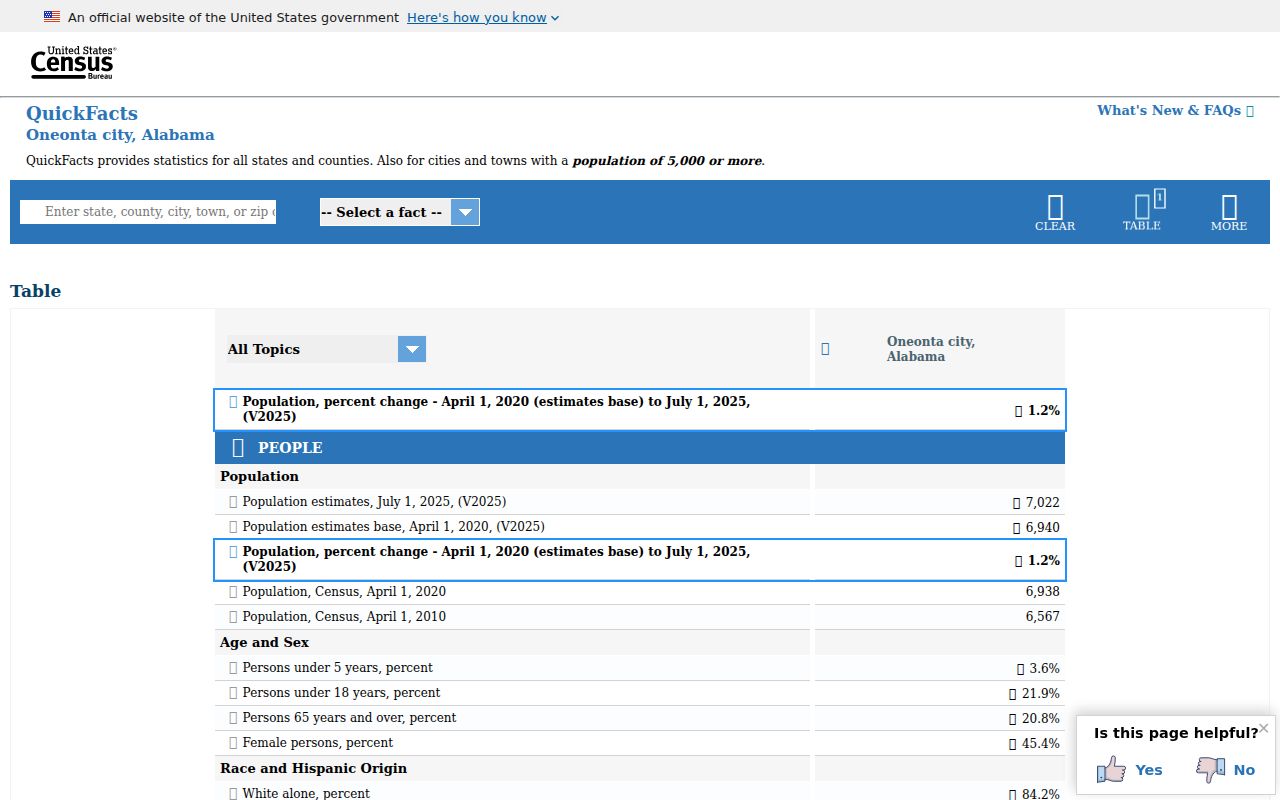
Population helps explain why Oneonta has its own police and municipal-court channels, but it does not measure an individual's record or risk.
ALEA's official 2017 city table counted 261 index crimes and reported Part I and Part II arrests. Those figures are old and rely on voluntary law-enforcement reporting. They should be labeled as a dated snapshot, not used as a current crime rate or a forecast. City totals describe reported events, while an individual Oneonta criminal history still requires the record-level sources.
The city grew from an iron-ore and rail settlement, incorporated in 1891, and became county seat in 1897. That civic role now places City Hall, municipal court, police records, and nearby county justice offices within one local records landscape.
Public Access Rules
Alabama's public-record rule does not make every Oneonta police or court item open. Ask the office that holds the record, describe the item narrowly, and expect protected details to be removed. City police handle their own reports. The municipal clerk handles city court files. ALEA controls fingerprint-linked repository information under its subject-review rules.
Key authorities:
Alabama Code § 36-12-40 gives Alabama citizens a right to inspect and copy public writings unless another law applies.
Alabama Code § 41-9-643 governs access to repository criminal-history information, which is not an open public name database.
Alabama Rule of Judicial Administration 33 governs court-record access and copying, while sealed and confidential matters stay restricted.
A no-result screen can mean the wrong source was searched. It can also reflect timing, spelling, confidentiality, or a case outside municipal jurisdiction. Confirm the custodian before drawing a conclusion.